

The Azores are one of those destinations that are difficult to describe until you have actually experienced them.
We had already travelled to several places where nature was the main attraction, but the Azores felt different from the moment we arrived. The combination of volcanic landscapes, crater lakes, lush green mountains, dramatic coastlines and small fishing villages creates an atmosphere that is both wild and incredibly peaceful.
The Azores are an autonomous region of Portugal made up of nine volcanic islands in the middle of the North Atlantic Ocean. They are located roughly between Europe and North America, making them a fascinating stopover between the two continents.
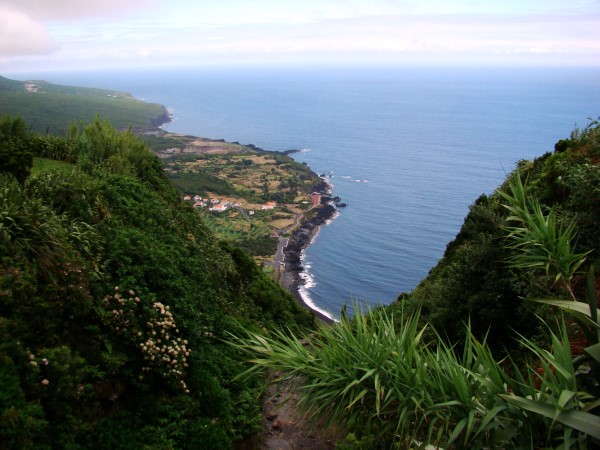
What impressed me most was the relationship between land and sea. Almost everywhere I went, the Atlantic Ocean was present in the background, while the volcanic origin of the islands was visible in the mountains, cliffs, black rocks and thermal waters.
Today, the Azores are particularly appealing to travellers looking for nature, adventure and a slower pace of travel. Hiking, whale watching, diving, canyoning, surfing, geotourism and simply exploring the islands by car are among the experiences that make this destination so special.
If you are looking for a destination where you can combine outdoor adventures with tranquillity, good food and spectacular scenery, We strongly recommend putting the Azores on your travel list.
- 📍 Where Are the Azores?
- 🌿 What Makes the Azores So Special?
- 🥾 The Best Things to Do in the Azores
- 🌋 São Miguel
- 🏔️ Pico
- ⚓ Faial
- 📅 How Many Days Do You Need in the Azores?
- 🚗 How to Get Around the Azores
- ☀️ What Is the Best Time to Visit the Azores?
- 🐋 Whale Watching in the Azores
- 🍽️ What to Eat in the Azores
- 🏨 Where to Stay in the Azores
- 🧭 Our Azores Travel Experience
- 🧳 Practical Tips for Visiting the Azores
- ❓ Frequently Asked Questions About the Azores
- 🌋 Final Thoughts: Are the Azores Worth Visiting?
📍 Where Are the Azores?
The Azores are located in the North Atlantic Ocean, around 1,500 kilometres west of mainland Portugal.
The archipelago consists of nine islands divided into three geographical groups:
- Eastern Group: São Miguel and Santa Maria
- Central Group: Terceira, Graciosa, São Jorge, Pico and Faial
- Western Group: Flores and Corvo
Each island has its own personality and landscape. That was one of the things I found most interesting during my trip. São Miguel is the largest and most populated island, while smaller islands such as Pico and Faial offer a quieter and more intimate experience.
Ponta Delgada, on São Miguel, is the largest city and one of the main gateways to the archipelago.
🌿 What Makes the Azores So Special?
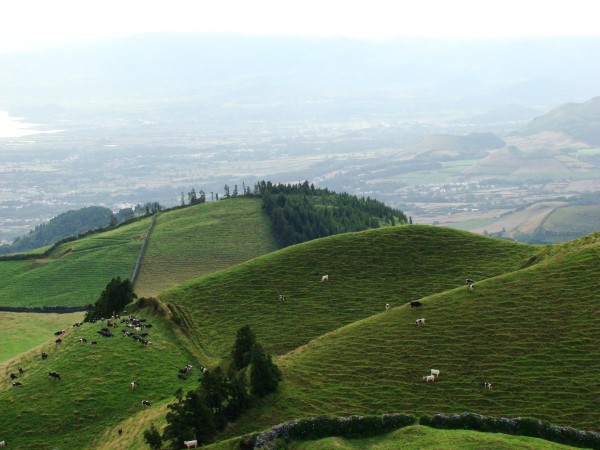
The first thing that struck me about the Azores was the colour green.
The landscape seems to have been painted in dozens of shades of green. Hills, pastures, forests and volcanic slopes dominate the scenery, while crater lakes add deep shades of blue and turquoise.
The volcanic origin of the islands is impossible to ignore. Old volcanic craters have become beautiful lakes and lagoons, while black basalt rock forms much of the coastline.
And then there are the cows. As I travelled around the islands, I constantly came across pastures filled with cattle. The famous black-and-white dairy cows almost seem to compete with people for space in the landscape.
The result is a destination that feels extraordinarily natural. The Azores combine volcanic geology, lush vegetation and Atlantic landscapes in a way that is difficult to reproduce anywhere else.
🥾 The Best Things to Do in the Azores
There is much more to the Azores than simply visiting viewpoints.
During my trip, I discovered that the islands are particularly well suited to travellers who enjoy being outdoors. Some of the experiences I would recommend include:
- Hiking through volcanic landscapes
- Visiting crater lakes and lagoons
- Whale and dolphin watching
- Exploring volcanic caves
- Swimming in natural pools
- Relaxing in thermal waters
- Visiting tea plantations
- Exploring small fishing villages
- Diving and snorkelling
- Surfing and other water sports
- Discovering volcanic landscapes and geosites
- Trying traditional Azorean food
- Exploring the islands by car without following a strict itinerary
The official Azores tourism website currently highlights hiking, whale watching, diving, geotourism, canyoning, kayaking and other outdoor experiences across the nine islands.
For me, however, one of the best things about the Azores was simply driving around and stopping whenever something caught my attention.
🌋 São Miguel
São Miguel was one of the islands I explored during my trip. It is the largest island in the archipelago and offers an impressive variety of landscapes and activities. In a relatively small area, you can find volcanic lakes, thermal springs, waterfalls, tea plantations, forests, viewpoints, beaches and charming villages.
🚗 Exploring São Miguel by Car
If you want to explore São Miguel independently, I strongly recommend renting a car.
Having your own car gave me the freedom to stop at viewpoints, change my route and discover places that were not necessarily part of my original plan.
São Miguel can be explored in several days, but I would recommend allowing at least two to five days if you want to see the main attractions without constantly rushing.
The island has a very good road network, although some of the smaller roads can be narrow and winding.
💙 Sete Cidades and Its Famous Lagoons
One of the landscapes I most associate with São Miguel is Sete Cidades.
The volcanic crater is home to two famous lagoons, Lagoa Azul and Lagoa Verde. From the viewpoints above the crater, the contrast between the two bodies of water and the surrounding green landscape is spectacular.
The most famous viewpoint is Miradouro da Vista do Rei, but I recommend exploring the area rather than simply stopping for a photograph.
Sete Cidades is one of those places where the landscape changes dramatically depending on the weather and the light.
🌊 Lagoa do Fogo
Another place I would not miss is Lagoa do Fogo.
The lake occupies the crater of an ancient volcano and is surrounded by mountains and vegetation. From the viewpoints along the road, the scenery is extraordinary.
If the weather is clear, the views are unforgettable.
However, the weather in the Azores can change quickly, so I would always check the conditions before making Lagoa do Fogo the main destination of the day.
🌲 Lagoa do Congro
Lagoa do Congro was one of the places that surprised me most. It is smaller and much less famous than Sete Cidades or Lagoa do Fogo, but that is precisely what makes it interesting.
Hidden among dense vegetation, the lake has a much more intimate atmosphere. Reaching it feels almost like discovering a secret corner of São Miguel.
If you have time, I recommend adding it to your itinerary.
🌋 Furnas: The Volcanic Heart of São Miguel
Furnas is another essential stop. This is one of the places where the volcanic nature of São Miguel is most evident. Steam rises from the ground, thermal waters flow beneath the surface and volcanic activity is part of everyday life.
One of the most unusual experiences here is watching the traditional preparation of Cozido das Furnas.
The dish is cooked underground using the natural heat of the volcanic ground.
Watching the pots being removed from the earth is an experience in itself, but tasting the dish afterwards makes the experience even better.
♨️ Terra Nostra Park and Thermal Baths
Furnas is also the perfect place to experience the thermal side of São Miguel. At Terra Nostra Park, you found one of the most iconic thermal bathing experiences on the island, surrounded by lush vegetation and a historic botanical garden.
Another popular option is Poça da Dona Beija, where several thermal pools allow visitors to relax in naturally warm water.
I recommend setting aside several hours for Poça de Dona Beija rather than trying to see everything quickly.
♨️ Caldeira Velha
Another thermal experience I enjoyed was Caldeira Velha.
Surrounded by forest, the warm water and volcanic landscape create a very different experience from a conventional swimming pool.
🍵 Gorreana Tea Plantation
Driving towards the northeastern part of São Miguel is an experience in itself.
The scenery becomes increasingly rural and green, and one of the stops I recommend is the Gorreana Tea Factory.
The Azores have a long tradition of tea production, and visiting the plantation provides an interesting contrast with the volcanic landscapes found elsewhere on the island.

🏔️ Pico
Pico was a completely different experience. Located in the Central Group of the Azores, Pico is close to Faial and São Jorge and forms part of the famous Triangle Islands.
Compared with São Miguel, Pico felt quieter, more remote and less crowded. That sense of space was precisely what I liked most.
🏔️ Climbing Mount Pico
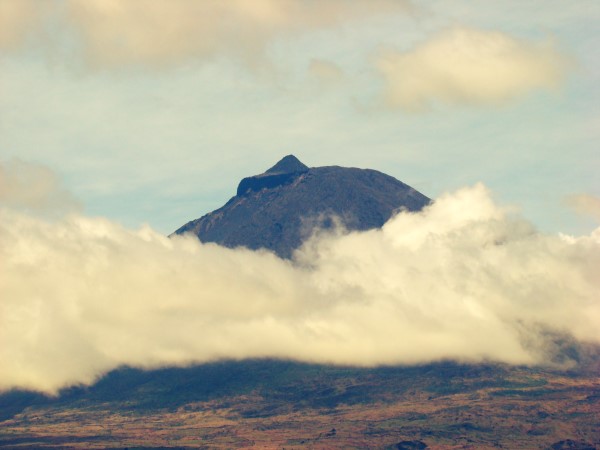
The unmistakable symbol of the island is Mount Pico, Portugal’s highest mountain.
You cannot really visit Pico without being tempted to climb it. We did not see the mountain simply as a physical challenge but it’s was one of the reazons to go to Pico Island.
However, this is not an ordinary walk. Weather conditions can change rapidly, the terrain can be demanding and the climb requires preparation and respect for the mountain. Anyone planning the ascent should check the current regulations, weather conditions and access requirements before setting off.
If you are not experienced with mountain hiking, hiring an accredited guide is a mandatory option. And you cannot climb without the mandatory registration in Casa de Montanha. Beware that there are a maximum of people that can climb every day.
The reward is an extraordinary landscape and, on a clear day, incredible views over the surrounding Atlantic.
🐋 Whale Watching in Pico
Another experience I strongly recommend in Pico is whale and dolphin watching.
The Azores are one of the world’s important areas for cetacean observation, with more than 20 different types of cetaceans potentially being spotted in the region.
Going out to sea changes the way you experience the islands. From the boat, the volcanic mountains appear completely different, and seeing whales or dolphins in their natural environment is one of the experiences I remember most vividly.
If whale watching is one of your priorities, I recommend allowing some flexibility in your itinerary because sightings depend on weather and sea conditions.
🍇 Pico’s Volcanic Vineyards
One of the most unusual landscapes on Pico is its vineyard culture. The vines are grown in volcanic soil and protected by countless small black stone walls.
The contrast between the dark volcanic rock, the green vines and the blue Atlantic Ocean creates one of the island’s most distinctive landscapes. This is also an excellent place to learn more about the island’s wine-producing tradition.
🌋 Gruta das Torres
Pico also offers an opportunity to explore its volcanic underground. Gruta das Torres is a lava cave created by volcanic activity and is one of the places that best illustrates the geological history of the island.
⚓ Faial
Faial was another of the Azorean islands I had the opportunity to visit. It is smaller than São Miguel and has a completely different personality. The island is strongly connected to the Atlantic and to the sailors who cross the ocean.
⚓ Horta and Peter Café Sport
The city of Horta is internationally famous for its marina. For generations, sailors crossing the Atlantic have stopped here, and that maritime history can still be felt throughout the city. One of the most famous places associated with this tradition is Peter Café Sport.
The café has become part of the history of the Atlantic crossing, and the countless messages, flags and memories left by sailors create a unique atmosphere.
Faial’s connection with sailing and the Atlantic is also reflected in Horta Marina, which is one of the most important stopping points for vessels crossing the North Atlantic.
🌋 Capelinhos Volcano
If there is one place on Faial that I would tell every visitor not to miss, it is Capelinhos. The landscape looks almost extraterrestrial.
In 1957, a volcanic eruption began off the coast of Faial and continued into 1958, creating new land and dramatically transforming this part of the island. The black volcanic landscape contrasts strongly with the green vegetation found elsewhere on Faial.
The old lighthouse, partly surrounded by the new volcanic landscape, makes the scenery even more impressive.
🏛️ Capelinhos Volcano Interpretation Centre
I also recommend visiting the Capelinhos Volcano Interpretation Centre. The building itself is particularly interesting because it was designed to blend into the landscape rather than dominate it.
Inside, visitors can learn about the eruption, the geological formation of the Azores and the history of volcanic activity.
The centre also provides access to the lighthouse and views over the volcanic landscape.
🌋 Caldeira do Faial
Another essential stop is Caldeira do Faial. The enormous volcanic crater is surrounded by lush vegetation and offers one of the island’s most impressive landscapes.
📅 How Many Days Do You Need in the Azores?
This depends entirely on how many islands you want to visit. For a first trip, We would recommend focusing on one or two islands rather than trying to see everything.
3–4 days
Ideal for a short break in São Miguel. You can visit Sete Cidades, Lagoa do Fogo, Furnas and several other highlights, although you will need to plan your days carefully.
7–10 days
With more than a week, you can combine islands. A combination such as São Miguel + Pico + Faial allows you to experience very different sides of the Azores.
This was particularly rewarding for me because each island had a distinct character.
10–14 days
If you have two weeks, you can create a much more ambitious Azores itinerary and consider adding islands such as São Jorge, Terceira or Flores.
🚗 How to Get Around the Azores
It’s almost mandatory to renting a car in Azores larger islands and also in Pico Island. It gives you flexibility and allows you to stop at viewpoints and attractions that may be difficult to reach by public transport.
On São Miguel in particular, having a car made a major difference to our experience.
For inter-island travel, you can use domestic flights and, depending on the route and season, ferries. Because the Azores are spread across the Atlantic, moving between islands can take more planning than it initially appears.
My advice is to check connections before booking accommodation and to avoid creating an itinerary with very tight connections.
☀️ What Is the Best Time to Visit the Azores?
One of the great advantages of the Azores is that the climate is relatively mild throughout the year. However, the weather is also famously changeable.
You can have sunshine, clouds, rain and wind within a relatively short period. For outdoor activities and hiking, we would generally favour late spring, summer and early autumn. The summer months usually offer the best chance of stable weather, although they are also a popular period to visit.
Spring can be particularly beautiful because of the lush vegetation and flowers. Autumn can be quieter and still offer excellent conditions on many days. Winter is milder than in many European destinations, but rain and wind can make outdoor activities less predictable.
My best advice is simple: never let a cloudy morning convince you that the whole day will be bad. The weather can change surprisingly quickly.
🐋 Whale Watching in the Azores
Whale watching is one of the activities we would recommend adding to an Azores itinerary. The archipelago is an important habitat for resident and migratory cetaceans, and more than 20 species can potentially be observed.
São Miguel, Pico and Faial all offer opportunities for whale and dolphin watching. We do it in Pico island. For me, the experience was about more than simply trying to photograph an animal. Being surrounded by the Atlantic, with the islands visible in the distance, makes the whole experience memorable.
If the sea conditions are not suitable, operators may need to change or cancel trips, so we recommend booking whale watching early enough in your itinerary to leave room for another attempt if necessary.
🍽️ What to Eat in the Azores
One of the pleasures of travelling through the Azores is discovering the local cuisine.
The most famous dish I tried was undoubtedly Cozido das Furnas, traditionally cooked using the natural heat of the volcanic ground.
But there is much more to Azorean cuisine.Depending on the island and restaurant, we recommend looking for:
- Cozido das Furnas
- Fresh Atlantic fish
- Local seafood
- Octopus dishes
- Local cheeses
- Azorean beef
- Pineapple from São Miguel
- Local tea
- Traditional desserts
Food is another way of understanding the volcanic and Atlantic character of the islands.
🏨 Where to Stay in the Azores
Accommodation depends very much on the island you choose. For a first trip to São Miguel, Ponta Delgada is a convenient base because it offers a wide range of accommodation, restaurants and services.
However, if you have a rental car, staying outside the city can give you a more rural and peaceful experience. We stayed in Ponta Delgada.
On Pico I would consider staying close to the main towns while choosing accommodation that allows easy access to the places you want to explore. In Pico we stayed in a house near the main village and we loved.
🧭 Our Azores Travel Experience
What I remember most about the Azores is not one particular viewpoint or attraction. It is the feeling of travelling through a landscape that still feels genuinely connected to nature.
I remember driving along roads surrounded by green pastures, stopping beside volcanic lakes, discovering thermal waters, watching the Atlantic from high viewpoints and arriving in small villages where life seemed to move at a different pace.
São Miguel gave me the greatest variety of landscapes.
Pico gave me a stronger sense of isolation and adventure.
Faial introduced me to the maritime history of the Atlantic and the extraordinary volcanic landscape of Capelinhos.
Together, these three islands showed me why the Azores are such a special destination.
If I returned, I would probably choose a different combination of islands rather than simply repeating the same itinerary.
That is perhaps one of the best things about the Azores: nine islands mean nine different reasons to return.
In our travel blog you find more information about our travel to the diferent islands.
🧳 Practical Tips for Visiting the Azores
Before travelling to the Azores, these are the things I would keep in mind:
✔️ Rent a car
If you want to explore independently, especially São Miguel, a rental car gives you much more freedom. In Fail you can rent a taxi to give your a island tour.
✔️ Pack layers
The weather can change quickly. I would always carry a light waterproof jacket, even on apparently sunny days.
✔️ Leave room in your itinerary
Do not plan every hour. Some of my favourite moments came from unexpected stops.
✔️ Check the weather
This is particularly important before hiking, climbing Mount Pico or taking a boat trip.
✔️ Book popular activities in advance
Hiking to Pico Mountain and some other outdoor activities can be popular during the busiest months.
✔️ Do not underestimate the islands
Distances may look small on a map, but winding roads, viewpoints and frequent stops mean that driving can take longer than expected.
✔️ Respect nature
The Azores are one of Europe’s great natural destinations. Stay on marked trails, avoid disturbing wildlife and leave the landscape exactly as you found it.
❓ Frequently Asked Questions About the Azores
Plan your trip using the following tools or website
Using the following links and tools on the website you are helping to maintain Scannertrip. This use is the same for you and you do not pay more for it. For Scannertrip it makes all the difference!!
Hotels
To find the best hotel stays use Booking. It is one of the best websites for booking stays, always with promotions on some destinations. The reliability and ease of booking and cancelling make it even the most popular.
Flights
Compare Hotels prices
To compare prices for your Stays you can use the Hotels Combined or hotellook websites. These search engines show different prices from other websites for the same destination. There may be a lower price for the same hotel on another website and these search engines will show it.
Rent a car
If you choose to rent a car, also use the price comparators. The autoeurope website compares prices from different rental companies.
Activities
When preparing what to do at your destination, you will search for activities to be occupied. Use this activity comparator in the scannertrip provided by the Musement, tiqets or the civitatis.
Transfers
Transfers to and from the airport can be purchased via the website kiwitaxi. So you don’t need to get in touch with the different companies in your destination looking for the best price.
Bus or Train
If you need to travel by Bus or Train to your destination you can use this tool to help you to find the best rates.
🌋 Final Thoughts: Are the Azores Worth Visiting?
Absolutely. The Azores are not a destination we would recommend simply because they are beautiful. We would recommend them because they offer something increasingly difficult to find: a genuine feeling of nature, space and discovery.
There are spectacular crater lakes, volcanic mountains, thermal waters, dramatic coastlines and some of the best whale-watching opportunities in the Atlantic.
But there are also quiet roads, small villages, green pastures and moments when you can simply stop the car and enjoy the landscape.
Our journey through São Miguel, Pico and Faial gave me only a glimpse of what the archipelago has to offer.
There are still six islands waiting for us.

No Comment! Be the first one.